
Resiliencecreates values
Projects developed in such distinctive locations require more than creating a desirable living environment; they must also preserve and carry forward the natural values that have shaped the appeal of the land.
From Living Amid Nature to Living in Harmony with Nature
In Hoi An–Da Nang, Cam Thanh is often associated with stretches of nipa palms lining the riverbanks—a landscape characteristic of the coastal estuary around Cua Dai. In such a setting, nature is far more than a backdrop for architecture. Nipa palm groves, waterways, and existing vegetation form an interconnected landscape structure that helps sustain habitats, biodiversity, and the broader ecosystem within the buffer zone of the Cu Lao Cham – Hoi An World Biosphere Reserve.
The value of real estate in Cam Thanh, therefore, cannot be measured solely by what lies within a project’s boundaries, such as land area, built-up area, architecture, or amenities. An equally important part lies beyond those boundaries—in the quality of the surrounding environment, waterways, vegetation, and the wider ecosystem of the area.
When nature itself contributes to a project’s appeal, preserving these inherent values also becomes part of the developer’s responsibility.
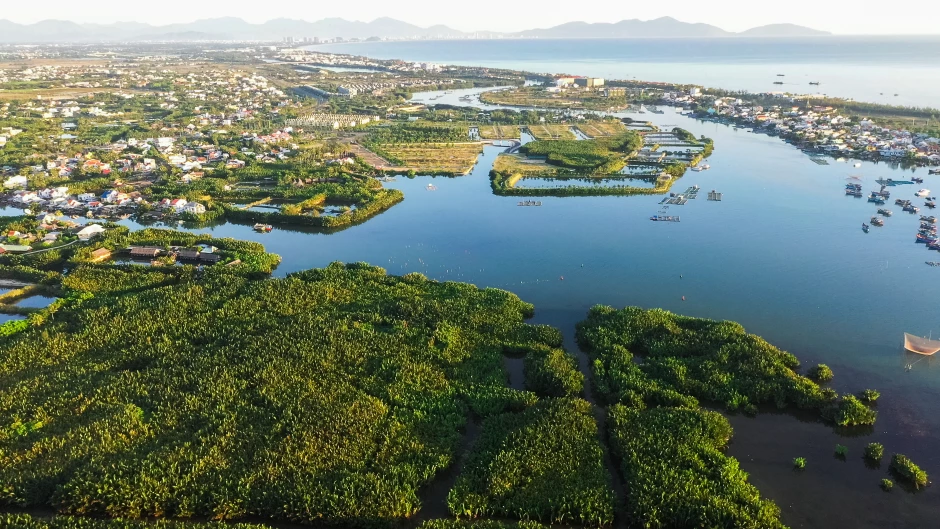
More Than 100 Hectares of Nipa Palm Forest Form the Distinctive Ecosystem of Cam Thanh
Casamia Balanca Hoi An is a project developed by Dat Phuong Group within the distinctive ecological setting of Cam Thanh. Rather than creating an entirely new landscape and placing buildings within it, the project is designed in close connection with the ecosystem that already exists. Some 3.6 hectares of nipa palm forest are preserved as part of the landscape, while the construction density of approximately 38% leaves room for greenery, waterways, and open spaces to coexist with the buildings.
This approach reflects a different perspective on ecological real estate. A project may feature extensive green areas and numerous parks, but that alone is not enough to create a living ecosystem. What matters more is how architecture is integrated harmoniously with the natural environment that existed before it. At Casamia Balanca, gardens, waterways, and open spaces are not simply aesthetic elements; they help create a gentle transition between architecture and landscape, allowing homes to remain connected to their surrounding environment rather than becoming isolated structures.
It represents a shift from “living amid nature” to “living in harmony with nature.” In this approach, people not only enjoy what nature has to offer, but also become part of the process of preserving it.
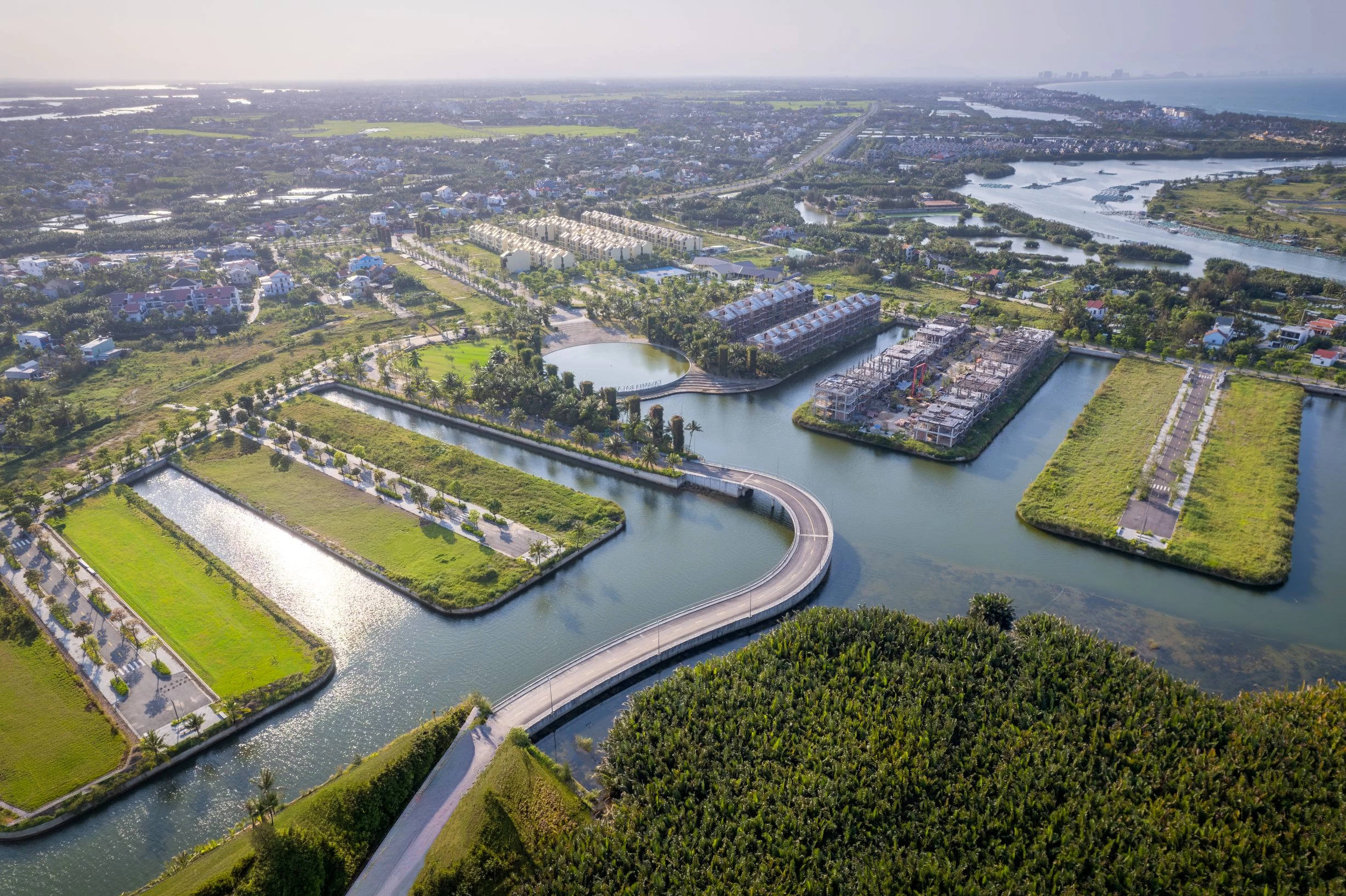
Nature as the Foundation of the Living Environment at Casamia Balanca Hoi An
When Responsibility Extends Beyond the Project Boundary, Commitment Becomes Action
Recognizing nature as an integral part of what gives a place its value, environmental responsibility cannot stop at the green spaces within a project. This is how Dat Phuong is extending the story beyond Casamia Balanca to the wider landscape.
Dat Phuong and the Management Board of the Cu Lao Cham – Hoi An World Biosphere Reserve have established a cooperation program for nature conservation, ecosystem restoration, and sustainable development for the 2026–2030 period, with the wetland nipa palm forests of Cam Thanh representing an important part of this ecosystem.
Under the “1 Billion Green – One Green Tree, One Commitment” program, Dat Phuong is committing VND 1 billion in resources over five years to support seedlings, materials, and related activities in accordance with a plan jointly agreed by both parties. The program aims to plant at least 25,000 trees during 2026–2030, while mobilizing additional social resources to gradually expand its scale.
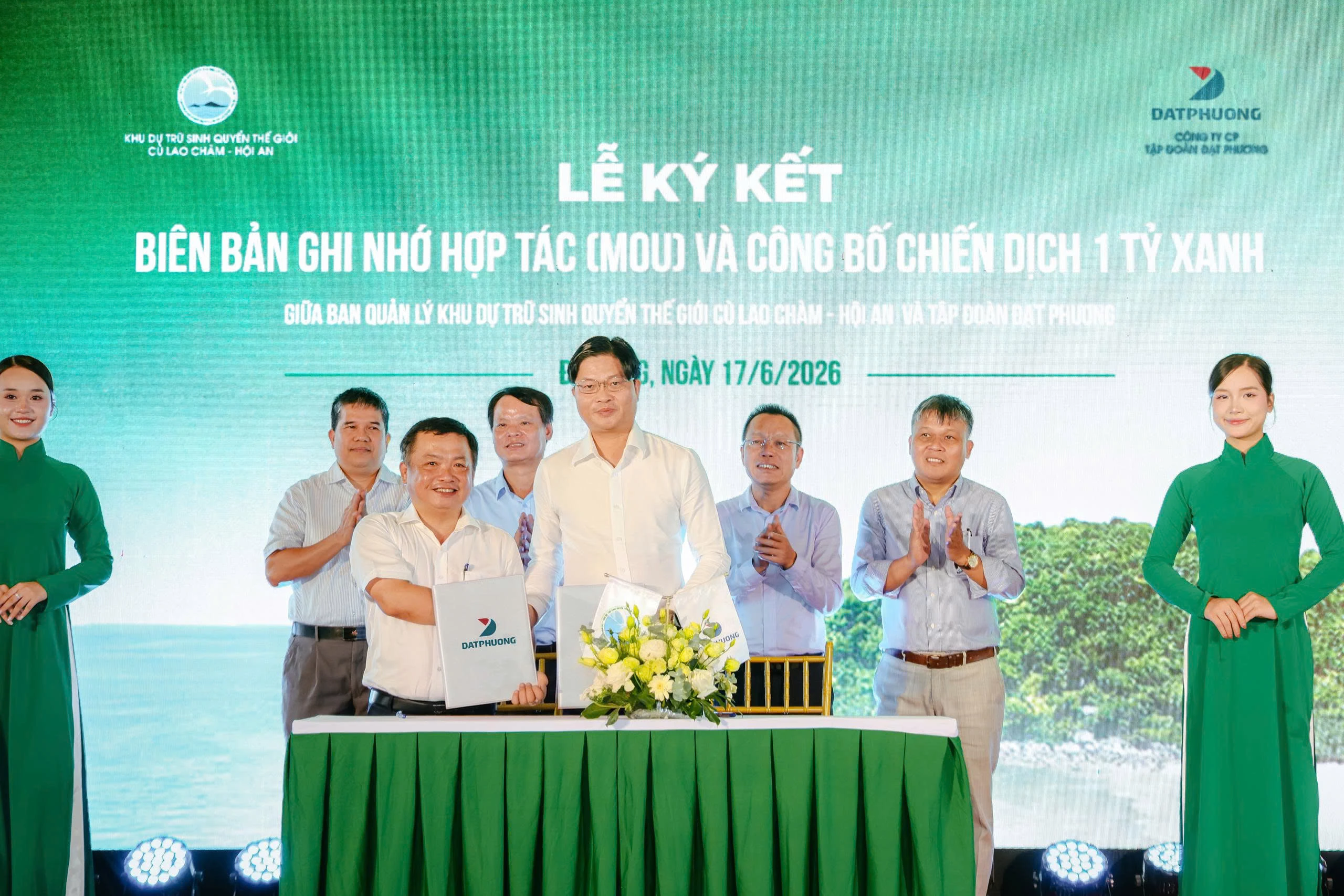
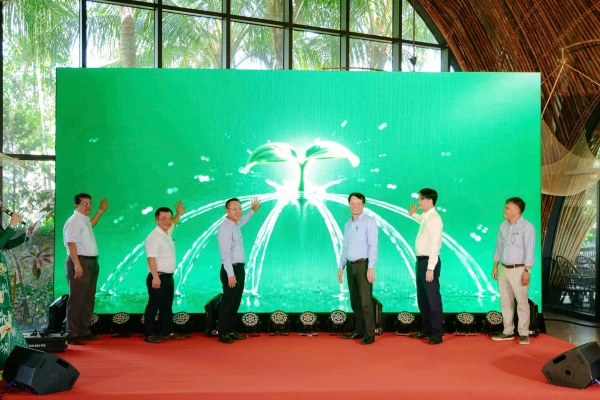
Dat Phuong Signs the “1 Billion Green” Program for 2026–2030
What stands out is not simply the number of trees to be planted, but the approach behind the program. Activities prioritize the restoration of natural forests, coastal forests, mangroves, and habitats with conservation value. Native species and those suited to the ecological conditions of each area are prioritized, alongside plans for ongoing care, replanting, and growth monitoring.
In this way, the green story extends beyond the boundaries of a single real estate project. It becomes a broader relationship between development, communities, the land, and the natural environment. This is also how Dat Phuong demonstrates its responsibility—from preserving green spaces within its projects to supporting the ecosystems of the areas where they are located, and further connecting businesses, organizations, local communities, and visitors in collective efforts to conserve and develop these natural values.
In August 2026, the first 500 trees under the “1 Billion Green – One Green Tree, One Commitment” program are expected to be planted in Cu Lao Cham – Hoi An. This marks the starting point toward the goal of planting at least 25,000 trees by 2030. Yet the significance of these first trees does not lie in reaching a large number in a single day, but in marking the moment when a commitment begins to take concrete form through action.
An ecosystem cannot be preserved through a single day of tree planting, just as a desirable living environment cannot be created solely through beautiful homes. Long-term value can only be built when human development and environmental health coexist in balance. In a place endowed with such rich natural values as Cam Thanh, Dat Phuong’s commitment to preserving the ecosystem represents a meaningful path toward sustainable development.