
Resiliencecreates values
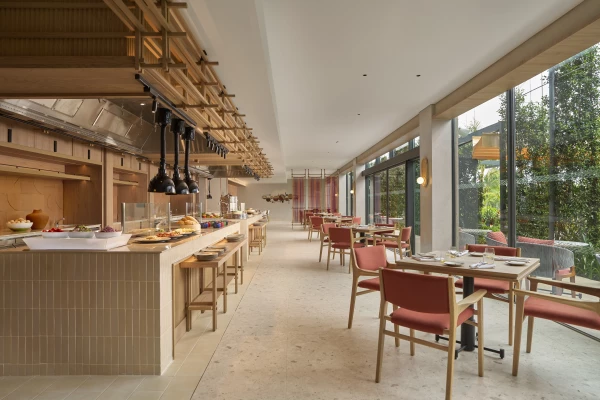
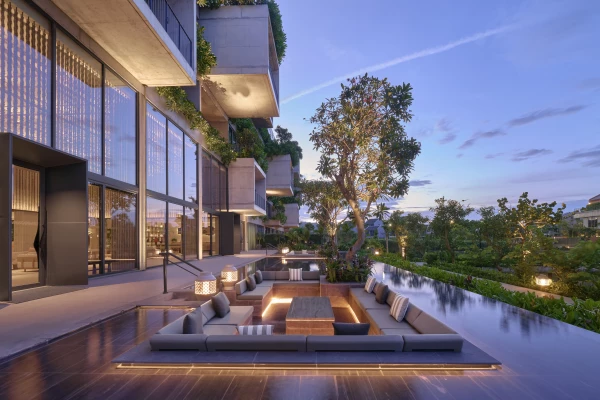
A representative of Dat Phuong said that at NHAAN Resort & Spa Hoi An, the company approached landscape design by studying Hoi An’s distinctive climate, soil conditions and ecosystems, then selecting plant species and arranging layers of greenery accordingly. Nature therefore serves not merely as a backdrop to the architecture, but as an integral part of the guest experience.
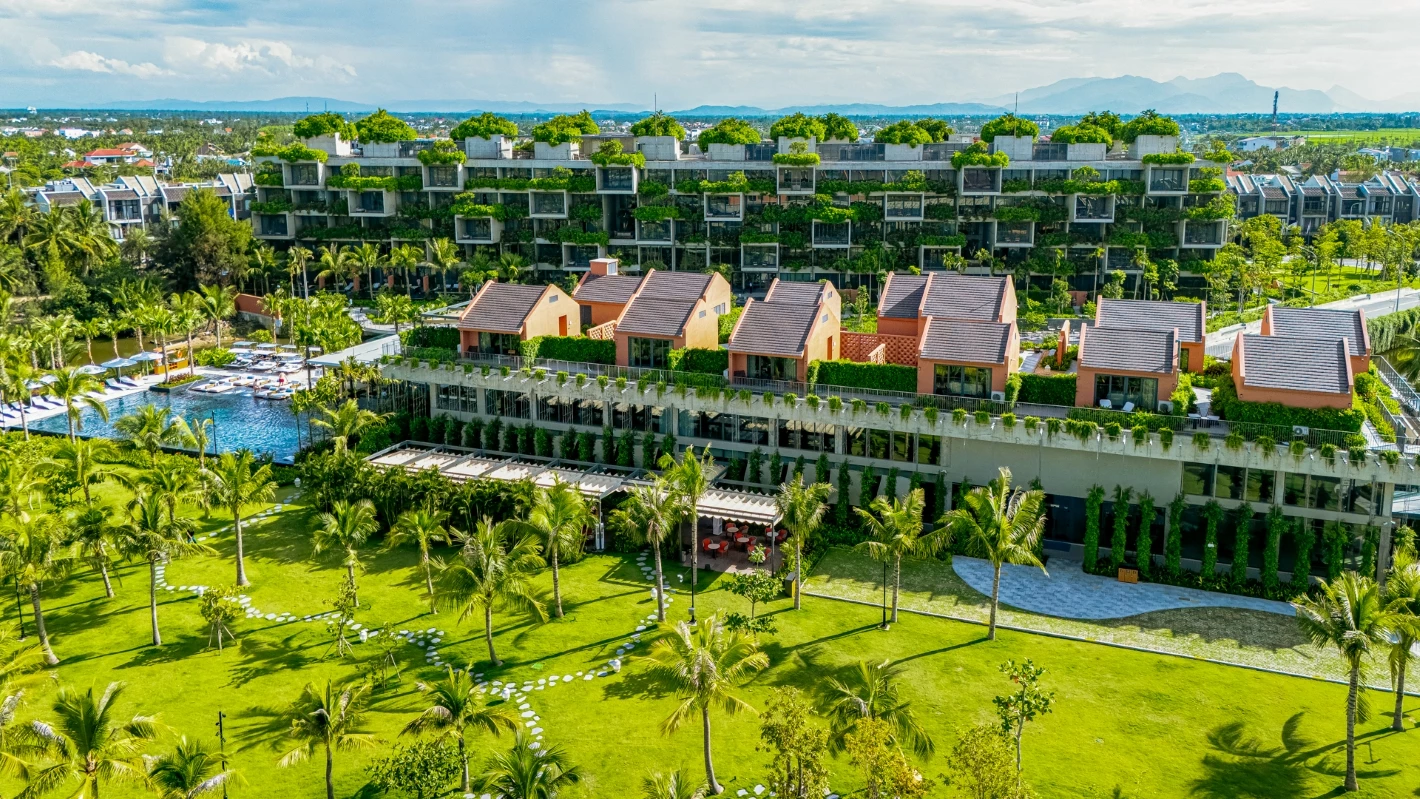
Carefully selected characteristic plant species bring the colors of Hoi An into NHAAN’s spaces – Photo: DAT PHUONG
Selecting Plants Rooted in the Local Landscape
For a resort situated within Cam Thanh’s distinctive ecosystem, landscape design involves more than choosing plants that complement the architecture. Their ability to adapt to the local climate, soil conditions and growing environment is equally important.
At NHAAN, this approach also seeks to bring familiar elements of Hoi An into the guest experience through native vegetation and plant species suited to the local environment.
The selected plants are intended both to thrive in the sunny, windy conditions of Central Vietnam and to contribute to the resort’s distinctive character.
Fruit-bearing coconut palms and sea grape trees evoke the open, relaxed character of the coast, while mature Quang Nam mango trees bring a sense of simplicity and familiarity associated with the heritage region.
Each species contributes its own form, color and character, together shaping the resort’s overall landscape.
Rather than applying a ready-made landscaping model, Dat Phuong has chosen an approach grounded in the site’s specific characteristics, allowing the inherent qualities of Cam Thanh to carry through into a contemporary resort environment.
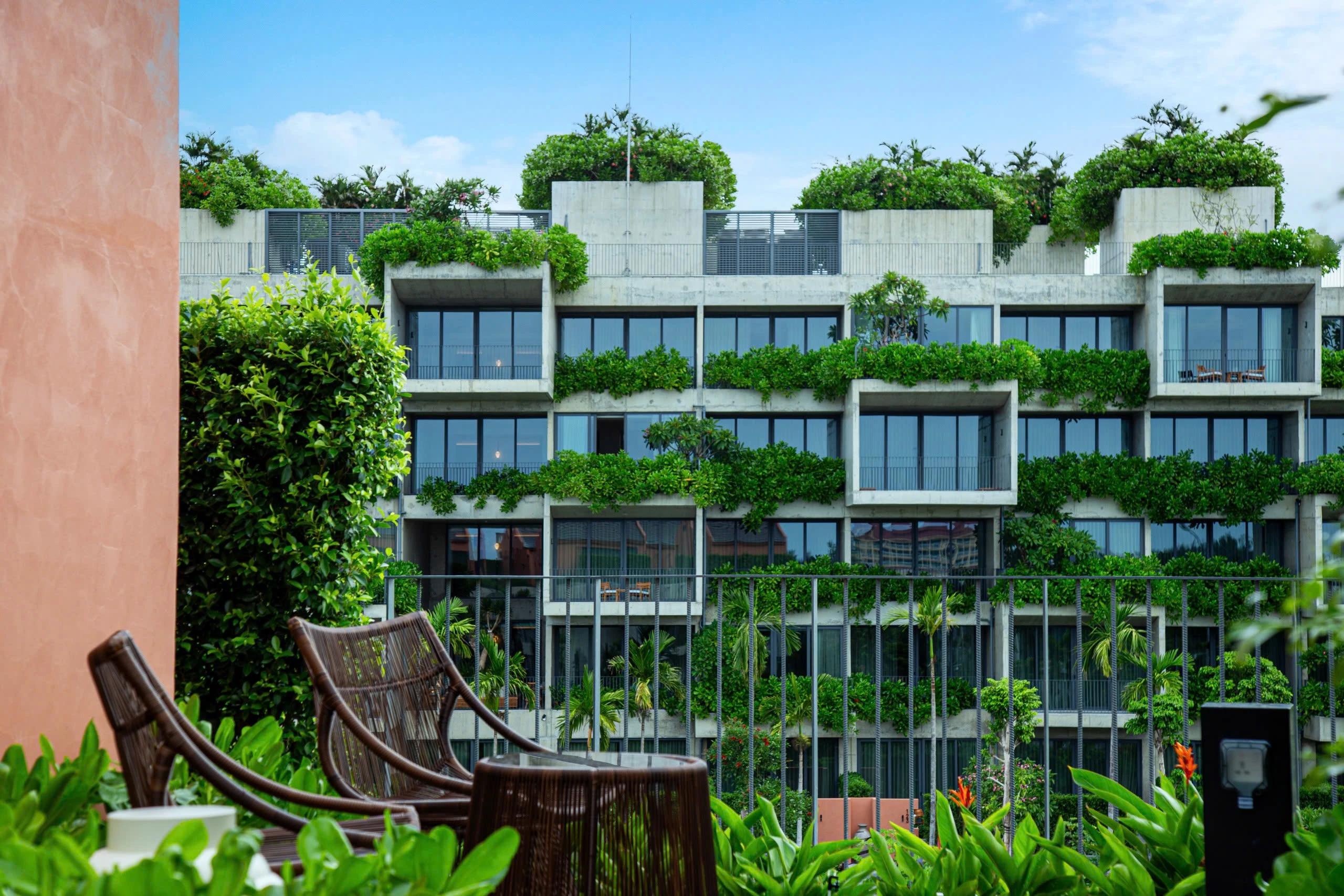
Layers of vegetation create transitions between the buildings and green spaces – Photo: DAT PHUONG
Bringing Nature into the Stay Experience
Selecting the right plant species is only the starting point. How different layers of vegetation are arranged and connected determines how greenery becomes part of the guest experience.
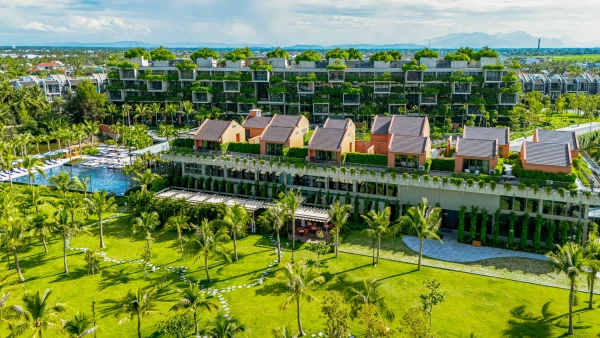
At NHAAN Resort & Spa Hoi An, plants are arranged at varying heights to create transitions between the architecture, gardens, amenities and surrounding natural landscape.
At the upper level, Burmese rosewood, camphor trees and queen’s crape myrtle form the principal tree canopy, complemented by red-stemmed fan palms for visual accents.
Their canopies provide shade, establish the overall landscape composition and form a backdrop for the lower layers of vegetation. This creates a landscape with distinct focal points without fragmenting it into disconnected sections.
Around the accommodation areas, red-flowered frangipani trees are combined with colorful foliage plants to create lively accents. The vivid blossoms stand out against the green backdrop, bringing nature closer to the living spaces and turning each balcony into a small garden where guests can enjoy the presence of greenery in their own private space.
At the middle level, clusters of ornamental palms, golden trumpet trees and other green species are interspersed to connect the upper canopy with the ground-level vegetation.
Differences in height, shape and color add depth to the landscape while creating soft transitions rather than rigid boundaries between different areas.
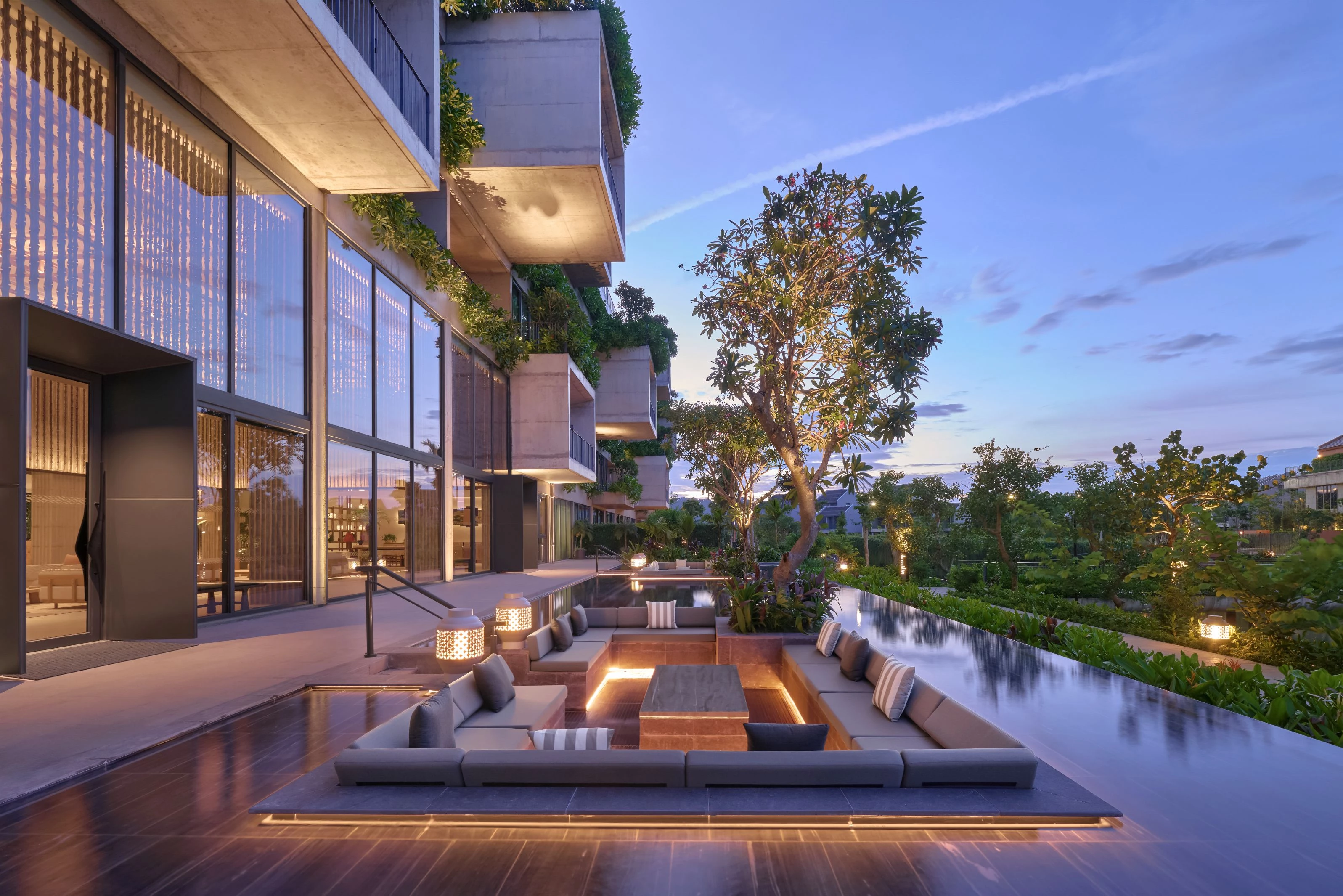
Plant selection and spatial arrangement become part of the experience at NHAAN – Photo: DAT PHUONG
The composition is completed by a lower layer featuring golden dewdrop shrubs, bird-of-paradise plants and pothos, combined with Japanese velvet grass. These ground-level green areas soften the architectural lines, create a sense of continuity and connect different spaces across the development.
One of NHAAN’s distinctive landscape features is a system of ficus hedges shaped into green walls that follow the architectural columns. Interwoven climbing stems provide shade and filter sunlight into subtle gradations of light and color, giving the resort’s service areas a distinctive rhythm.
To bring this vision to life, Dat Phuong devoted considerable time to sourcing and selecting plant species suited to the architecture, carefully pursuing its chosen approach until the desired harmony was achieved.
This attention to detail reflects the developer’s commitment to bringing the landscape, vegetation, architecture and resort experience together in a natural way.
Layered planting delivers more than visual appeal. It also provides shade, helps improve the local microclimate and enriches the landscape. Each layer serves a different purpose while contributing to a unified composition in which architecture and nature complement one another.
Notably, NHAAN’s landscape extends beyond the boundaries of the resort. The development is surrounded by Cam Thanh’s natural nipa palm forest ecosystem, creating a green connection between the property and its existing natural surroundings.
Rather than replacing the existing landscape with an entirely new appearance, protecting and preserving this ecosystem helps the resort maintain its connection with the surrounding environment.
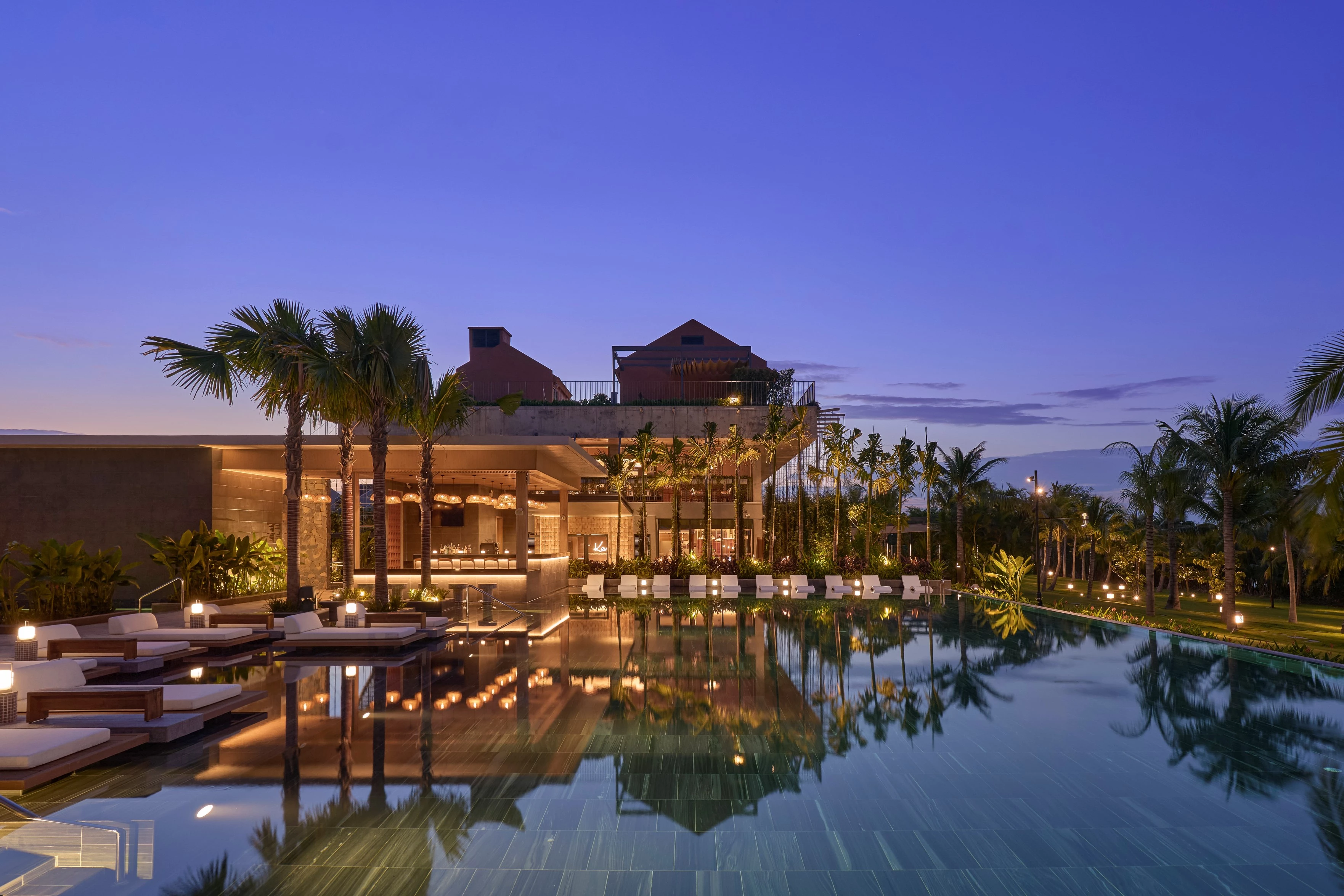
Connecting the resort environment with the local ecosystem – Photo: DAT PHUONG
From species selection and plant height to density and placement, each type of vegetation is carefully considered as a component of the overall architectural and landscape design.
Every decision affects not only aesthetics but also functionality, sightlines and the way guests perceive and use the space.
Greenery is therefore more than an additional decorative element; it helps shape the resort experience from the earliest stages of site planning and design.
A Dat Phuong representative shared that the landscape design at NHAAN begins with an understanding of the local environment: selecting plant species suited to nature and arranging layers of greenery to preserve the inherent qualities of Cam Thanh.
This also reflects the company’s consistent approach to developing resort real estate in Hoi An: not simply constructing a property on a piece of land, but helping tell the story of the place in which it stands.