

Kiên tâmtạo giá trị
As one of the world’s largest hotel groups, with more than 9,000 hotels and resorts across 27 brands, Hilton develops each brand around a distinct positioning. While many brands within its portfolio follow standardized design and operating principles, Tapestry Collection takes a different approach, seeking properties that embody the unique identity and character of each destination.
This is also why, when bringing Tapestry Collection to Vietnam, Hilton chose not Hanoi, Ho Chi Minh City, or Da Nang, but Hoi An as its starting point. Hilton has recently opened a 174-room Tapestry Collection by Hilton hotel, developed by Dat Phuong Group within the Casamia urban development, just minutes from Hoi An Ancient Town. The project marks the first presence of this lifestyle hotel brand in Vietnam and Southeast Asia.
According to Hilton representatives, what makes Hoi An compelling is not simply its ancient town, lanterns, or the Thu Bon River, but also its unhurried pace of life, sense of tranquility, and profound cultural heritage.
These intangible values are precisely what make Hoi An a natural fit for the Tapestry Collection philosophy, offering guests an experience rooted in local identity rather than simply a place to stay.
Not Another “Miniature Hoi An”
Mr. Luong Minh Tuan, Chairman of the Board of Directors of Dat Phuong Group, further noted that Hoi An possesses a rare advantage: it is home to an ancient town recognized by UNESCO as a World Cultural Heritage Site, while also forming part of the Cu Lao Cham – Hoi An World Biosphere Reserve.
The convergence of cultural heritage and natural ecosystems gives the destination its distinctive appeal.
“From a heritage perspective, Hoi An is one of Vietnam’s most exceptional destinations. Our project sits within the landscape of both heritage designations. We hope to bring these values not only to domestic travelers, but also to international visitors,” Mr. Tuan told TheLEADER.
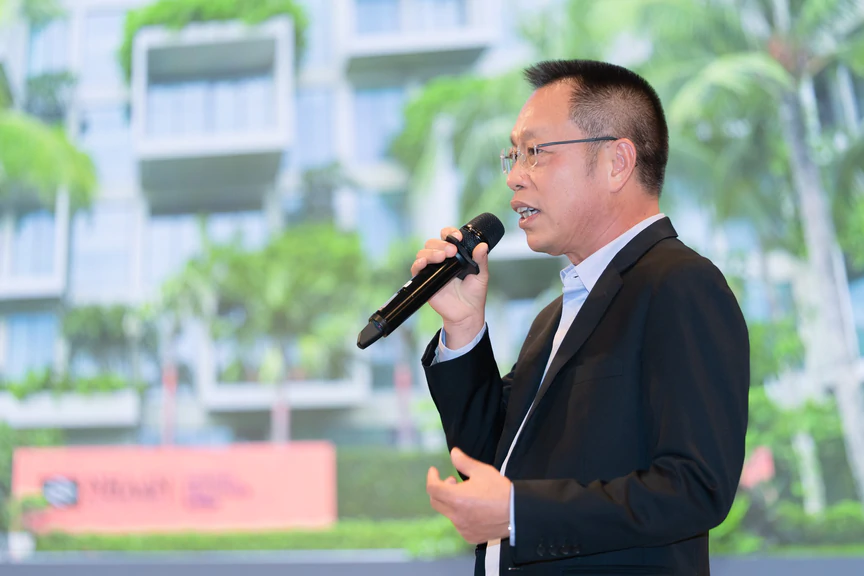
Mr. Luong Minh Tuan, Chairman of the Board of Directors of Dat Phuong Group. Photo: Huyen Trang
However, he noted that a resort seeking to tell the story of Hoi An cannot simply recreate its old tiled roofs, yellow walls, or familiar streets. If the approach stops at visual imitation, the project risks becoming nothing more than a miniature version of the ancient town.
A shared vision for preserving and bringing local identity to life led Dat Phuong to choose architect Vo Trong Nghia as its partner in developing NHAAN Resort & Spa Hoi An.
Rather than replicating the ancient town, NHAAN interprets Hoi An through a contemporary architectural language. The distinctive tiled roofs of Hoi An have been reimagined as a series of layered, undulating roof forms that serve as an architectural signature. Exposed concrete, wood, natural light, and open spaces oriented toward the De Vong River and the nipa palm forests of Cam Thanh come together to create an environment that feels contemporary while remaining closely connected to the local landscape.
“The spirit of Hoi An remains, but not by repeating what already exists,” Mr. Tuan emphasized.
Greenery, water, natural ventilation, and daylight are not treated as decorative additions, but as integral elements of the architectural space. The drainage and water management systems are designed in response to the natural terrain, connecting with the flow of the Co Co River. The landscape is shaped around plant species suited to local conditions, allowing the development to blend into the riverside ecosystem of Cam Thanh rather than stand apart from its surroundings.
Traditional values have been incorporated into the project in much
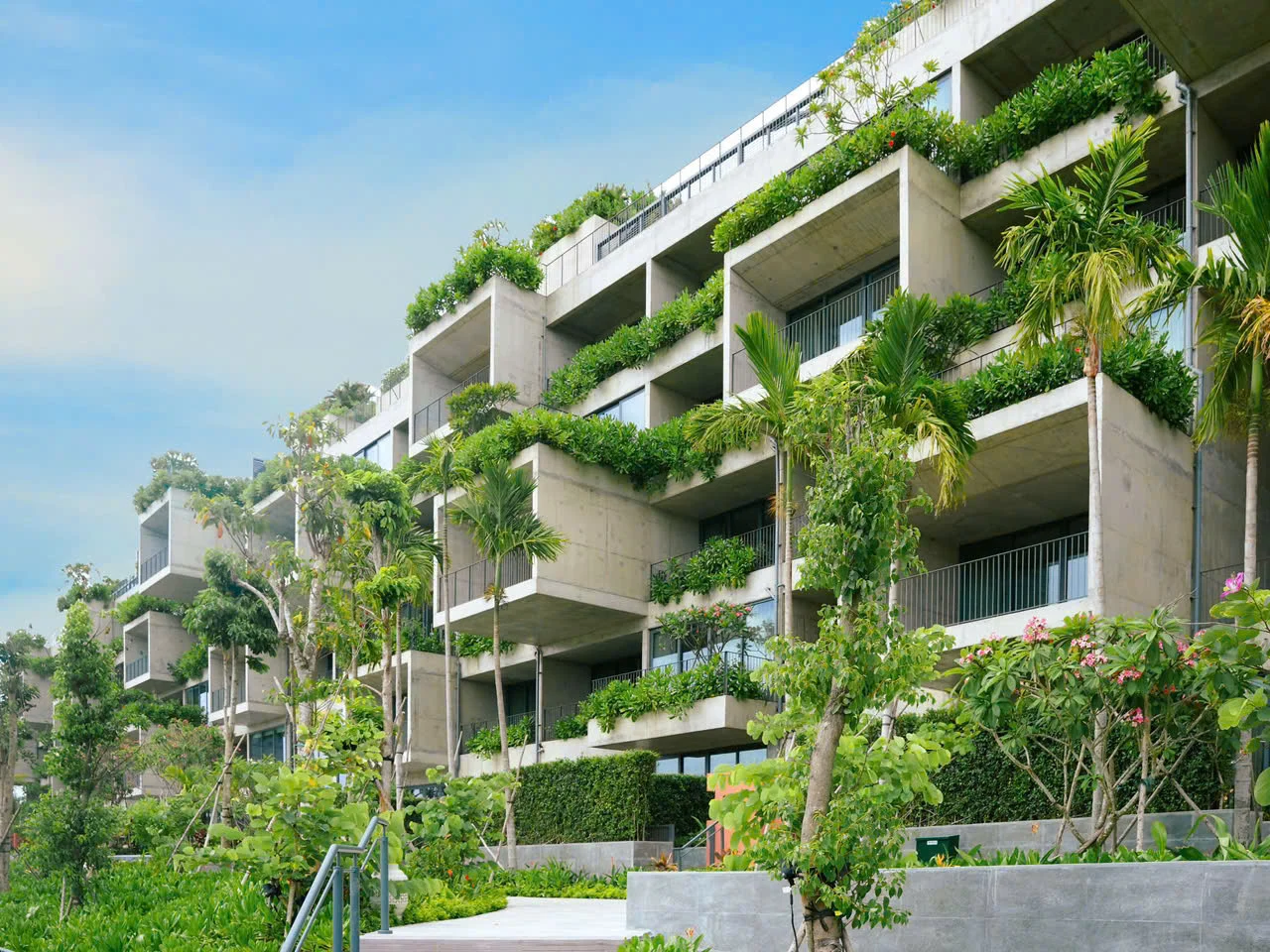
The architectural volumes at NHAAN are designed in a contemporary language while evoking the spirit of Hoi An. Photo: Huyen Trang
This is also where the visions of developer Dat Phuong and Hilton converge. What Hilton seeks for Tapestry Collection is not simply a hotel that reflects the look and feel of its locality, but a place where guests can genuinely immerse themselves in the culture, people, and rhythm of life of the destination.
According to the Chairman of Dat Phuong Group, NHAAN is a combination of “Nha” (home) and “An” (peace), evoking the image of a peaceful home in a heritage destination. More than simply the name of a resort, it also reflects the company’s perspective on what defines a luxury experience.
Luxury does not necessarily come from expensive materials or extravagant amenities. Its greater value lies in the sense of tranquility, privacy, and connection that guests can experience throughout their stay.
“Our goal is not to create a place where guests simply come to stay and then leave, but one where they can immerse themselves in the spaces, culture, and everyday life of this destination,” Mr. Tuan said.
Turning Local Identity into an International Standard
According to Hilton representatives, more than 95% of NHAAN’s employees come from Hoi An and Da Nang. This is particularly meaningful because the warmth guests experience cannot be created through service standards or manuals alone.
It comes from people who have grown up alongside the local culture and understand the stories behind each traditional craft, ingredient, greeting, and smile.
“They are not simply delivering a service; they are sharing a part of their own home with every guest,” a Hilton representative said. NHAAN’s connection to the local community is also reflected in the way it curates the guest journey.
Rather than limiting experiences to staged activities designed for visitors, the resort brings guests closer to local life through activities such as making lanterns with artisans, shaping pottery, discovering the craft of Kim Bong carpentry, learning to brew Vietnamese coffee, and preparing dishes based on traditional recipes.
According to Hilton representatives, these are not experiences created solely for tourists, but activities that remain part of the everyday life of the local community and continue to be preserved through generations. Through these experiences, guests are not merely observing Hoi An’s culture from the outside. They have the opportunity to participate, interact, and gain a deeper understanding of the values that have shaped the identity of the destination.
Alongside culture and people, sustainability is also embedded in NHAAN’s architecture and operations.The resort uses LED lighting, maximizes the use of natural daylight, and operates an on-site glass-bottling system to significantly reduce single-use plastic. These solutions not only support more sustainable operations, but also contribute to protecting the destination’s environment over the long term. “That is also why NHAAN and Tapestry Collection by Hilton are such a natural fit,” the Hilton representative emphasized.
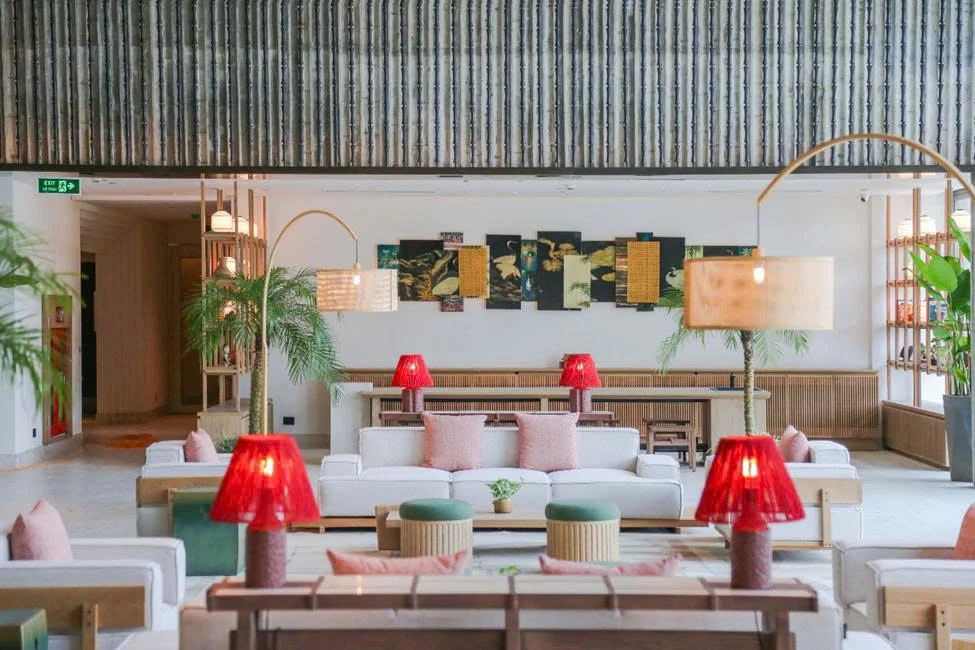
The spaces at NHAAN are designed around a philosophy that values tranquility, privacy, and connection with nature and local culture. Photo: Huyen Trang
Mr. Tuan also believes that as the hospitality industry continues to evolve, differentiation between projects will no longer be determined primarily by the number of rooms, the size of swimming pools, or the level of luxury offered by their amenities.
Competitive advantage will increasingly belong to projects that can translate local culture, landscapes, and people into experiences with enough depth to leave a distinctive and difficult-to-replicate impression.
This is also the direction Dat Phuong is pursuing in the hotel and resort sector. Rather than simply adding more accommodation facilities, the company aims to develop products capable of continuing the story of each destination through architecture, services, and the overall guest journey.
For Hoi An, the arrival of NHAAN not only adds a new resort to the destination, but also opens up opportunities to expand the tourism experience beyond the boundaries of the ancient town.
NHAAN becoming the first Tapestry Collection hotel in Vietnam, therefore, represents more than a milestone in the partnership between Hilton and Dat Phuong. It demonstrates that local identity, when carefully studied and thoughtfully translated, can serve as the foundation for a hospitality product that meets international standards while retaining a distinctive sense of place.
